 +1 929 201 3767
 info@embroideredpatches.us
 Login
Login



Why Embroidered Patch Edges Fray and How Professional Finishing Prevents It
Ordering jacket patches in bulk comes down to two decisions, and getting either one wrong costs money. First, the patch material has to match how the jacket actually gets used, not just how the sample looks under store lighting. Second, the supplier has to deliver what was quoted, on time, without quality dropping once the order size goes from ten pieces to a thousand.
This guide breaks down both decisions in order: how embroidered and PVC patches hold up differently, what actually changes the price on a bulk order, and what to check before committing to a supplier.
Why Do Embroidered Patch Edges Fray Over Time?
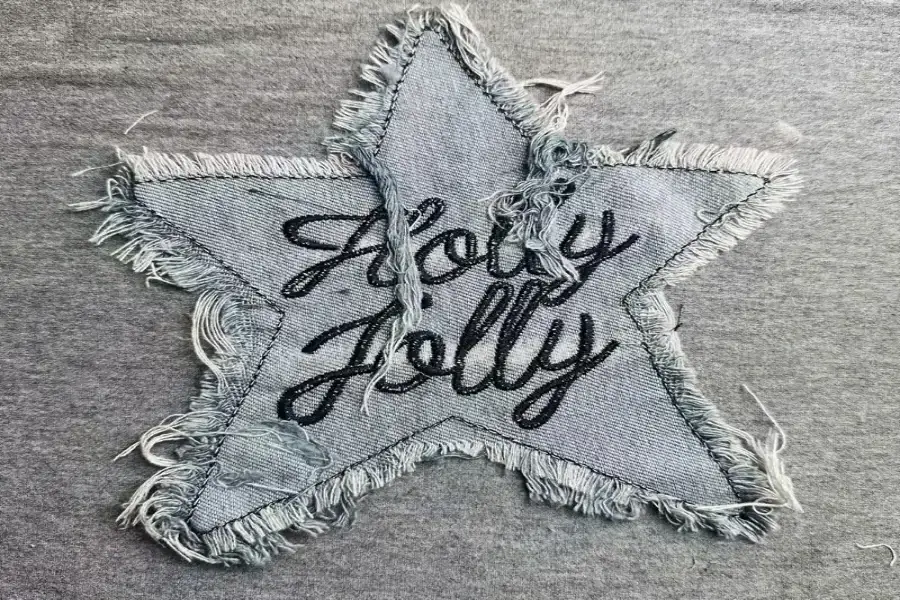
Patch edges fray because the raw fabric border has nothing to hold the cut threads in place, and everyday movement plus washing pulls them apart bit by bit. It’s a finishing problem more than a quality one. The right border stitch prevents it almost entirely.
The Raw Cut
Cutting the base fabric to shape a patch slices straight through the weave, leaving raw thread ends with nothing holding them in place. Every time the jacket flexes, brushes against a bag strap, or gets pulled on and off, those loose fibers work themselves further apart. It’s slow at first, then noticeable within a few months of regular wear.
Wash Breakdown
Washing speeds it up. Water and agitation weaken natural fibers along the cut edge faster than anywhere else on the patch, since that’s where the threads have no fabric anchoring them on both sides.
How Professional Finishing Prevents Fraying
The fix happens at the production stage, not after the patch is already falling apart.
Stitch-Based Finishing
Established embroidery patches companies in USA prevent fraying by running a dense satin or merrowed stitch around the entire border, locking the raw patch edge inside the thread instead of leaving it exposed. Merrowed borders work best on simple shapes like circles and rectangles, while satin stitching handles complex or irregular outlines a merrow machine can’t run.
Sealing Methods
For synthetic materials, some manufacturers seal the patch edge with heat instead of stitching, melting the fibers together so they can’t separate. A liquid sealant applied along the border works the same way on fabric-based patches, chemically bonding the loose fibers so the patch edge holds even after repeated washing.
Where Do PVC Patches Perform Better?
Outdoor gear, tactical vests, and anything exposed to rain or mud call for a different build than stitched thread. There’s no fabric edge to fray and no fine detail lost to thread thickness.
Weather Exposure
- Rain, mud, and constant sun exposure break down stitched patches faster than molded ones.
- No fabric backing means no fraying, cracking, or fading over time outdoors.
- Common on field jackets, bags, and gear that stays outside for long stretches.
Fine Detail Work
- Small text and intricate logos hold up better in molded plastic than in thread.
- PVC Rubber patches are made by injecting liquid material into a mold matching the artwork, which produces raised, sharp patch edges between colors that embroidery can’t replicate at small sizes.
- Works well for compact logos, badge-style designs, and multi-color artwork.
What Decides Embroidery vs PVC?
The choice comes down to where the patch lives and how it gets treated day to day, not which sample looks better on a table.
| Use Case | Better Fit |
| Uniforms, formal wear | Embroidery |
| Outdoor gear, bags, tactical | PVC |
| Mixed product lines | Both |
Formal and uniform settings still favor embroidery because it reads as established and holds up to repeated washing without losing shape. Outdoor gear, tactical equipment, and bags lean toward PVC since there’s no fabric edge to wear down and no color fading from sun exposure over time.
Brands running multiple product lines rarely pick just one. It’s common to see embroidery on staff uniforms and PVC on field jackets or gear within the same company, matched to what each piece actually goes through.
Bulk Order Pricing Comes Down to a Few Factors
Price per patch isn’t fixed. It moves based on quantity, materials, and how fast the order needs to ship. Knowing what actually changes the number keeps a quote from turning into a surprise.
- Order size sets the base rate: A run of 1,000 embroidered patches typically prices out around $0.30–$0.35 per piece; smaller batches can run two to three times that per unit; cost per patch drops in tiers as quantity climbs.
- Metallic thread and extra colors add cost: Standard thread colors keep the base price intact; metallic thread or a high color count usually adds $0.10–$0.20 per patch.
- Backing type changes the price: Sew-on backing tends to cost less than velcro; velcro requires an extra material layer and attachment step.
- Rush production adds a surcharge: Standard turnaround runs 2–4 weeks; compressing that timeline usually means paying extra for priority production and faster shipping.
What to Check Before Placing a Wholesale Order
A good quote isn’t enough on its own. The supplier behind it matters just as much as the price.
Request Samples First
A small test batch catches quality and color issues before committing to volume.
Confirm Pricing Upfront
Get the minimum order quantity and full pricing structure in writing before production starts.
Check the Turnaround Window
Standard production runs 2–4 weeks; know this before rush fees become a surprise.
Ask About Returns
Confirm what happens if a batch arrives with defects or doesn’t match the sample.
Running through this checklist is what separates a smooth custom jacket patches wholesale order from one that arrives short on quality or late on timeline.
Common Queries About Fraying Of Patch Edges
1- How do you keep patch edges from fraying?
Applying a liquid sealant like Fray Check along the raw edge works on fabric-based patches, while a satin or merrowed stitch locks the border in place permanently. Heat sealing works the same way on synthetic materials.
2- How long do embroidered patches last?
Sew-on patches typically last as long as the garment itself. Iron-on patches last 6 months to 3 years depending on wash frequency, though adding stitched edges around an iron-on patch can extend that to 5–7 years.
3- What are the three main types of custom patches?
Embroidered, woven, and PVC rubber are the three most common types. Embroidered works best for bold logos and uniforms, woven handles fine detail and small text, and PVC suits outdoor and tactical use where waterproofing matters.
4- What is the border of an embroidered patch called?
The thick, wrapped-thread patch edge is called a merrowed border. Complex or irregular shapes that can’t run through a standard merrow machine typically use a satin stitch border instead.
5- What’s the best material for embroidered patches?
Poly-cotton twill or 100% polyester twill is the industry standard, since the tight weave supports dense stitching without puckering or fraying at the edges.
Wrapping It Up
Patch material and supplier choice are the two decisions that actually determine how a jacket patch holds up and whether a bulk order arrives on budget. Embroidery still wins for uniforms and formal wear, PVC holds up better outdoors, and pricing comes down to quantity, materials, and turnaround rather than guesswork. Get those two right, and everything else, sizing, backing, finishing, falls into place without much difficulty.

As a fashion analyst behind EmbroideredPatches.us, I love exploring the world of patches and all the creativity they bring. On this blog, I share tips, ideas, and simple techniques for making patches that last and look great. I explain colors, designs, and materials in a way that’s easy to follow, so anyone can try customizing their own patches. From small personal projects and gifts to collections and hobbies, patches are a fun way to add personality, style, and charm to clothes, bags, hats, and more. My goal is to inspire readers to bring their patch ideas to life, enjoy the process, and celebrate every little detail along the way.