 +1 929 201 3767
 info@embroideredpatches.us
 Login
Login



Embroidered or PVC Patches? Make The Right Choice For Yourself
Most people pick between embroidered and PVC patches based on one thing: which one looks better in the photo. It’s a fair starting point, but it’s not the full picture. The real difference shows up months later, after the patch has been through rain, washing, sun, or daily wear on a bag or jacket.
That’s usually when people realize they picked based on looks alone and didn’t think about how the patch would actually hold up. This guide breaks down what separates the two, so you can pick based on what you actually need, not just what looks good on day one.
What Makes Embroidered Patches Different From PVC Patches
Many businesses and teams still lean toward custom embroidered patches in America when they want a traditional, stitched look for uniforms or merchandise. Embroidered patches are made by stitching thread directly onto a fabric base, layer by layer, until the design takes shape. This is what gives them that raised, textured look you can actually feel when you run your hand over it.
The role of texture
The texture comes from thread density. Tighter stitching creates a fuller, more defined look, while looser stitching gives a flatter finish. This is also why very fine details or small text don’t always translate well in embroidery.
Where you’ll usually see them
Embroidered patches are the standard choice for uniforms, team jerseys, school badges, and jackets, which is part of why they still carry that traditional, trusted look.
Let’s Talk About PVC Patches
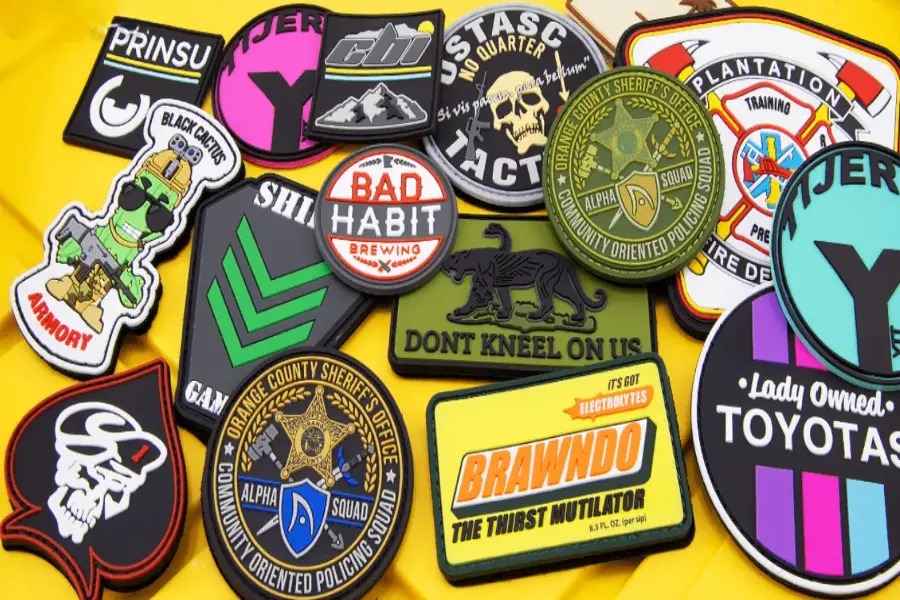
PVC patches are made using a mold instead of thread. The design is poured into a rubber-like PVC material, which sets into raised, defined shapes with sharp edges and bold, solid colors.
Why do the colors and edges look sharper
Since the design comes from a mold rather than individual stitches, PVC can hold tighter lines, small text, and layered colors much more accurately. This is also what makes customizable PVC patches easier to work with, since the mold can be adjusted for size, shape, and color combinations without the limitations that thread density creates.
Why do they hold up outdoor conditions
PVC doesn’t absorb water the way fabric does, so it resists rain, mud, and daily wear without fading or warping.
Embroidered Patches vs PVC Patches
Once you know how each patch is made, the next question is simple: how do they actually perform side by side? Here’s a quick breakdown to make that easier to see.
| Embroidered Patches | PVC Patches | |
| Look and feel | Classic, textured, soft on fabric | Bold, smooth, slightly firmer feel |
| Water/rain exposure | Absorbs moisture, takes longer to dry | Resists water, dries quickly |
| Fading over time | Can fade with repeated washing | Stays solid, doesn’t fade easily |
| Cold weather | Stitching stays flexible in most conditions | Can stiffen slightly in very low temperatures |
| Wear and tear | Thread may fray at the edges over years of use | Surface resists cracking with good material quality |
| Best suited for | Uniforms, jackets, regular rotation | Outdoor gear, bags, workwear |
As the table shows, the right choice depends more on where the patch will be used than on which one looks better. Keep this in mind before finalizing your design and material.
What Details Can Each Patch Handle?
Design complexity is where the two materials really separate. Embroidery works well with bold logos and clear lettering, but small text or thin lines can lose shape once stitched, since thread has a physical limit to how fine it can go.
PVC handles detailing differently. Because the design comes from a mold, it can hold tiny text, thin outlines, and layered colors without losing clarity. This makes it a better fit for logos with a lot of small elements or gradient shading.
If your design is simple and bold, either option works fine. If it’s detailed or text-heavy, PVC is usually the safer choice.
How Patches Actually Attach
Beyond the design itself, how a patch attaches to fabric matters just as much for everyday use.
Sew-on and iron-on
Sew-on backing is the most permanent option and works well for uniforms or jackets you don’t plan to change often. Iron-on backing is quicker to apply but works best on fabric that can handle heat, and it’s not always ideal for gear that gets washed frequently.
Velcro backing
Velcro is the most flexible option since it lets you remove or swap patches without any stitching or heat involved. This is why Velcro PVC patches are common on tactical vests, bags, and uniforms that need patches changed often, whether for rank, team, or event-specific designs.
Why Do Patch Prices Vary?
Pricing depends on a few practical factors rather than the material alone:
- Size: larger patches use more material and thread, raising the cost
- Number of colors: more colors mean more stitching or mold detail
- Order quantity: bulk orders lower the per-unit price for both types
- Embroidery cost driver: tied to thread density and stitch count; more detail means more stitching time
- PVC cost driver: tied to the mold; smaller orders cost more per patch, but larger quantities bring the price down significantly
Neither option is automatically cheaper. It depends on your design complexity and how many patches you’re ordering.
Quick Comparisons of Pros and Cons
| Embroidered Patches | PVC Patches | |
| Pros | Widely trusted for uniforms and teams; easy to sew or iron on | Low maintenance; holds fine detail and bold color layering |
| Cons | Struggles with small text or fine detail | Higher cost on small orders due to mold setup |
Can You Combine Both Patch Types?
Combining embroidery with PVC in a single patch is more common than most people expect. Brands often use stitched detail for the logo or text, paired with a PVC border or backing for added durability.
This approach works well when you want the traditional embroidery look but still need the patch to hold up outdoors. It gives teams and brands a practical middle ground, without having to choose between style and durability.
FAQs That Answer Your Queries
What is the difference between PVC and embroidered patches?
Embroidered patches are made by stitching thread onto a fabric backing, giving a textured, classic look. PVC patches are molded from a rubber-like material, giving them sharper edges, bold colors, and better resistance to water and wear.
Are PVC patches better?
Not necessarily better, just different. PVC patches hold up better outdoors and resist fading, cracking, and moisture. Embroidered patches offer a more traditional, textured look that’s often preferred for uniforms and team branding.
Can PVC patches be sewn on?
Yes. While Velcro is common for PVC patches that need to be removed or swapped often, they can also be sewn or ironed on for a more permanent attachment, depending on the backing you choose.
How long do embroidery patches last?
With normal use, embroidered patches can last for years. Heavy washing or constant outdoor exposure can cause the thread to fade or fray over time, though the stitching itself usually stays intact.
How much do PVC patches cost?
Cost depends on size, number of colors, and order quantity. Since PVC patches require a custom mold, smaller orders may cost more per patch, but the price drops significantly with bulk orders.
Final Thoughts
Choosing between embroidered and PVC patches comes down to how the patch will actually be used. If it’s for uniforms or everyday branding, embroidery still holds up well and looks classic. If it’s for gear that faces rain, sun, or daily wear outdoors, PVC is the more practical pick. There’s no universal right answer, just the one that fits your actual use case.

As a fashion analyst behind EmbroideredPatches.us, I love exploring the world of patches and all the creativity they bring. On this blog, I share tips, ideas, and simple techniques for making patches that last and look great. I explain colors, designs, and materials in a way that’s easy to follow, so anyone can try customizing their own patches. From small personal projects and gifts to collections and hobbies, patches are a fun way to add personality, style, and charm to clothes, bags, hats, and more. My goal is to inspire readers to bring their patch ideas to life, enjoy the process, and celebrate every little detail along the way.